INJECTION
DUAL CHAMBER
FORMULATION
PFS
WEARABLES
ALL INJECTION
OCULAR
ORAL
RESPIRATORY
PULMONARY
NASAL
ALL RESPIRATORY
SKIN
SUSTAINABILITY
MORE
INTERVIEWS
EXPERT VIEWS
EARLY INSIGHTS
COMPANY LISTINGS
OUR AUTHORS
THE MAGAZINE
EVENTS
ED CALENDAR
MEDIA PACK
CONTRIBUTE
Subscribe
INJECTION
DUAL CHAMBER
FORMULATION
PFS
WEARABLES
ALL INJECTION
OCULAR
ORAL
RESPIRATORY
PULMONARY
NASAL
ALL RESPIRATORY
SKIN
SUSTAINABILITY
MORE
INTERVIEWS
EXPERT VIEWS
EARLY INSIGHTS
COMPANY LISTINGS
OUR AUTHORS
THE MAGAZINE
EVENTS
ED CALENDAR
MEDIA PACK
CONTRIBUTE
SEARCH
SEARCH
advanced search
Wearable Injectors
78
Issue No #78
September 22nd, 2017
Download PDF
Issue 78 - Sept 2017
Inside the magazine
WEARABLES
Dr Jeannie Joughin
Enable Injections
WEARABLE INJECTOR PLATFORM: THE CASE FOR EARLY PARTNERING
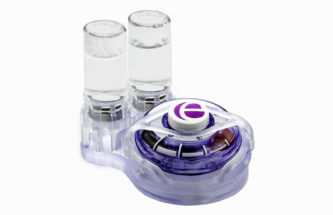
Jeannie Joughin describes how significant factors and developments have converged leading to the rise of patient-centric healthcare and self-administration, the wearable injector at the cutting edge. Also showing that early clinical partnership with a platform wearable device company is beneficial across numerous criteria, and how this was a key design consideration for Enable’s wearable technology.
WEARABLES
Chris Henshall
West Pharmaceutical Services
PUTTING PATIENTS FIRST: INNOVATING DRUG CONTAINMENT AND DELIVERY
Innovations in self-administered drug delivery systems are transitioning care out of hospitals and clinical settings into the home. To ensure patient compliance with treatment is maintained, an easy-to-use self-administration system can be key. Chris Henshall discusses the factors manufacturers should consider to ensure self-injected therapies meet patients’ needs and therefore improve patient outcomes.
WEARABLES
Dr Jackson Thornton
HOW LUBRICANT CHOICE AFFECTS DOSE ACCURACY IN INSULIN PUMPS
The development of fully automated, closed-loop glucose monitoring and insulin delivery systems can closely mimic a real pancreas. However, since the patient is not directly involved in administering the dose, these devices depend on one key factor - dosing accuracy. Jackson Thornton and Vinay Sakhrani examine how lubricant selection in the insulin cartridge, typically an afterthought, can make the delivery device more accurate.
WEARABLES
Joe Reynolds
Noble
DEVICE TRAINING AND ONBOARDING CONSIDERATIONS FOR ON-BODY DELIVERY SYSTEMS
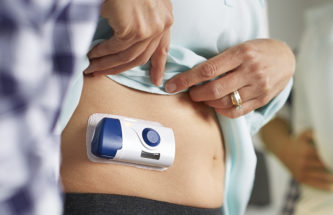
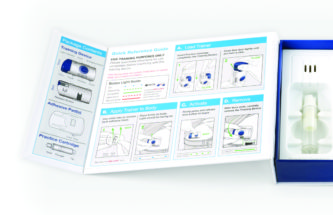
New delivery systems for larger volume and more complex drugs, such as wearable injectors, are revolutionising patient treatment. However, research has shown that patients need to receive quality training and onboarding to ensure they use the devices properly and retain the information. Joe Reynolds explores the factors that need to be considered in developing optimal training devices for patients.
WEARABLES
Ian Thompson
Ypsomed
REDUCING THE COMPLEXITY OF LARGE-VOLUME SELF-INJECTION FOR PHARMA COMPANIES & PATIENTS
Ian Thompson updates us on YpsoDose, a new prefilled, large-volume patch injector platform, and how it is designed to simplify the approach to wearable injectors for both pharma companies and patients.
WEARABLES
Dr Kate Hudson-Farmer
FROM VIAL TO WEARABLE INJECTOR
While autoinjectors are often the delivery method of choice for patient self-administration, there are occasions when a vial and syringe format is required. To overcome the problems associated with this method, Medicom has developed a flexible, wearable patch pump which can accept a simple glass vial and provide a fully automated injection system. Hans Jensen and Kate Hudson-Farmer explain how it works.
INTERVIEW
Derek Brandt
GETTING TO KNOW SENSILE MEDICAL
Chief Executive Officer Derek Brandt and three of his colleagues – Christoph Lüdi, Head of Systems Engineering, Alex Perrier, Senior Technology Manager, and Marco Drüssel, Mechanical Engineering Manager – have all been a part of Sensile Medical for the past ten years, and here reflect on the company’s past and discuss the future.
Top