INJECTION
DUAL CHAMBER
FORMULATION
PFS
WEARABLES
ALL INJECTION
OCULAR
ORAL
RESPIRATORY
PULMONARY
NASAL
ALL RESPIRATORY
SKIN
SUSTAINABILITY
MORE
INTERVIEWS
EXPERT VIEWS
EARLY INSIGHTS
COMPANY LISTINGS
OUR AUTHORS
THE MAGAZINE
EVENTS
ED CALENDAR
MEDIA PACK
CONTRIBUTE
Subscribe
INJECTION
DUAL CHAMBER
FORMULATION
PFS
WEARABLES
ALL INJECTION
OCULAR
ORAL
RESPIRATORY
PULMONARY
NASAL
ALL RESPIRATORY
SKIN
SUSTAINABILITY
MORE
INTERVIEWS
EXPERT VIEWS
EARLY INSIGHTS
COMPANY LISTINGS
OUR AUTHORS
THE MAGAZINE
EVENTS
ED CALENDAR
MEDIA PACK
CONTRIBUTE
SEARCH
SEARCH
advanced search
INJECTION
PREFILLED SYRINGES
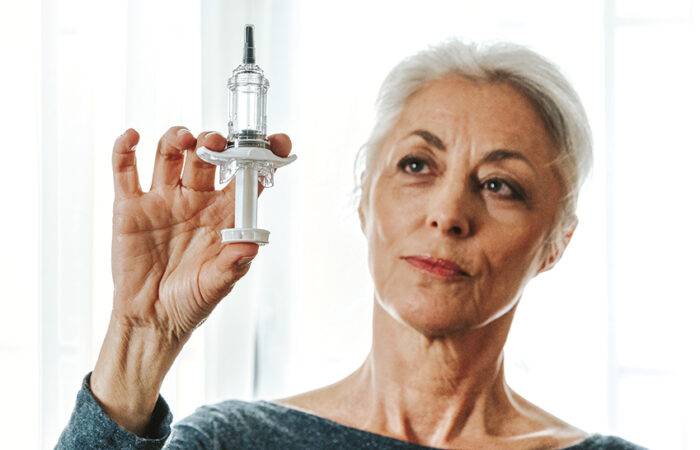
BREAKTHROUGH FOR LARGE-VOLUME MANUAL INJECTION: A FIRST-OF-ITS-KIND LARGE-VOLUME PFS IN A PASSIVE SAFETY SYSTEM
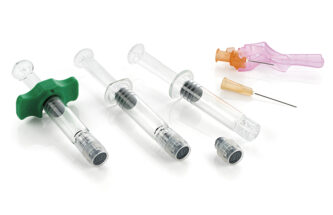
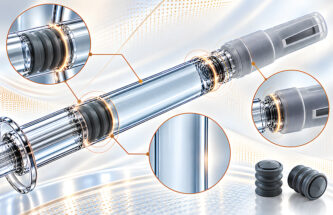
Isabelle Jeangoudoux and Léa Salfati introduce the industry’s first fully integrated large-volume passive safety system, combining the syriQ BioPure
®
5.5 mL prefillable glass syringe with the Safe'n'Sound
®
5.5 mL passive safety system. The authors explain how joint development, compatibility testing and human factors research are de-risking large-volume subcutaneous self-injection at home.
INJECTION
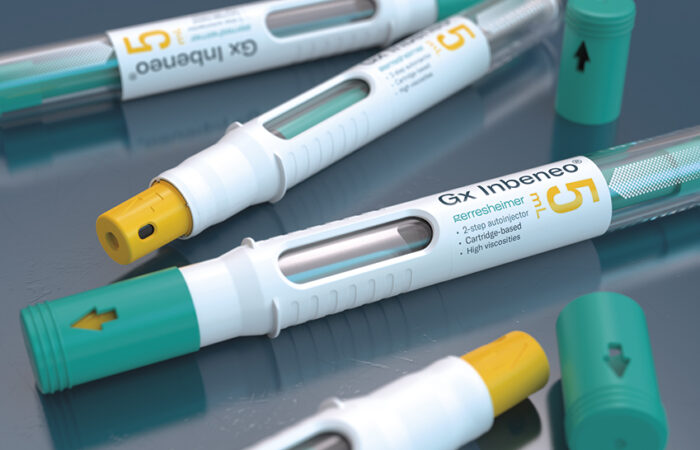
FROM 3 mL TO 5 mL: EXTENDING AN AUTOINJECTOR PLATFORM FOR LARGER-VOLUME BIOLOGICS
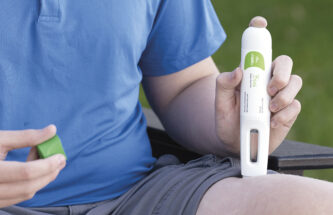
Moritz Mond and Dr Reza Abedian consider the subcutaneous delivery of larger volumes and higher viscosities, sharing the innovative engineering behind the Gx Inbeneo 5 mL autoinjector concept, designed to offer future developers greater flexibility for drug delivery via a handheld device.
PREFILLED SYRINGES
Dr Jakob Lange
Ypsomed
FOR THE RECORD: HOW PAST EXPERIENCE ENABLES FUTURE SUCCESS
Dr Jakob Lange and Shawn James discuss the value of the experience hidden behind metrics such as completed projects and commercialised devices – the wealth of accumulated process knowledge that enables a company to bring hard-learned lessons forwards to benefit each new development programme and evolve its product portfolio to meet the needs of an evolving sector.
PREFILLED SYRINGES
Darren Hieber
Ensera
THE PLATFORM ADOPTION GAP: WHY DEVICE SELECTION IS ONLY THE BEGINNING OF COMBINATION PRODUCT DEVELOPMENT
Darren Hieber investigates the often overlooked gap between selecting an injection device platform for a drug development programme and having a finalised combination product ready for commercialisation, digging into the various activities required to bridge the gap.
INTERVIEW
Vince Masciopinto
SHL Medical
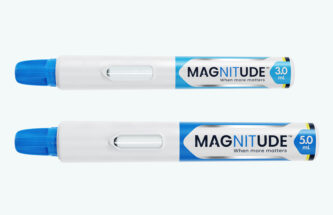
When More Matters – Advancing Large-Volume Drug Delivery with SHL’s Magnitude
In this interview, Vince Masciopinto, discusses the strategic evolution of SHL's Maggie platform into Magnitude while discussing large-volume delivery and considering the technical breakthroughs, market shifts and user insights that define its growth.
PREFILLED SYRINGES
Dr Nesrine Rebzani
BD (Becton Dickinson & Company)
Ensuring Deep-Cold Reliability for mRNA Therapies: Advancing CCI Testing Approaches for Prefilled Syringes
Dr Nesrine Rebzani and Elsa Muller of BD discuss recent work done by the company to establish a robust methodology for testing the container closure integrity of prefillable syringes under deep-cold conditions, highlighting the challenges in establishing these methods and the value of the data acquired.
INDUSTRIALISATION
Ingmar Kneer
GAPLAST
IMPLANTABLE DRUG DELIVERY SYSTEMS: BUILDING A ROBUST SUPPLY CHAIN FROM POLYMER EXTRUDATE TO COMMERCIAL PRODUCT
Ingmar Kneer discusses the broader considerations of commercialising an implantable drug delivery system beyond the implant itself, considering factors such as manufacturing, automation, regulatory concerns, traceability and the accompanying delivery system.
INJECTION
Erik Berndt
ZwickRoell
FROM COMPONENT TESTING TO SYSTEM PERFORMANCE: THE SHIFT IN VERIFYING MODERN DRUG DELIVERY SYSTEMS
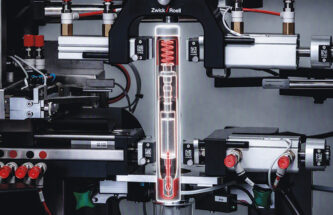
Erik Berndt and Peter Schmidt consider the relationship between ISO and USP requirements for the effective verification of modern drug delivery systems, providing an overview linking relevant chapters of the US Pharmacopeia to the corresponding ISO-based test requirements.
INJECTION
Asmita Khanolkar
A Large-Volume and High-Viscosity Autoinjector Delivery Platform for Biotherapeutics
Asmita Khanolkar, Marta Vilaplana, Susanna White and Pete Evans present the Bios platform, designed to simplify device development for the delivery of biologics while maintaining identical key design aspects across all Bios variants.
PHARMA VIEW
Dr Niels Christian Nilsson
Crux Product Design
QUANTIFYING THE PHYSICAL CAPABILITIES OF FEMALE AUTOINJECTOR USERS
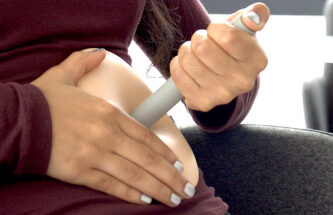
Dr Niels Christian Nilsson, Dr Horacio Pace-Bedetti, James Hoare and Matt Hill, summarise a recent empirical study characterising the physical strength of female autoinjector users, which can be used as a basis for design specifications and help to ensure more accessible shield-activated autoinjectors.
1
PREFILLED SYRINGES
Charlotte Leconte-Ostrowski
NIPRO PharmaPackaging
Building a Biopharmaceutical-Grade PFS: From Glass Tubing to Finished Container
Charlotte Leconte-Ostrowski and Christoph Grinda present ENOVIA™, a quality level designed to enhance understanding and achievement of high quality device design for combination products, biologics and biosimilars.
INJECTION
Iker Ibisate
RPK Medical
ENGINEERING THE NEXT GENERATION OF AUTOINJECTORS
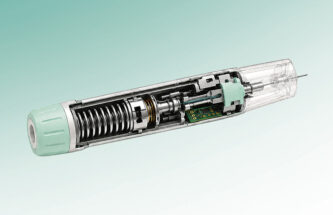
Iker Ibisate examines the significant potential of springs and stamped metal components to broaden the design space for autoinjector platform developers by condensing an increasing array of key functions into a minimal number of high-precision parts.
PREFILLED SYRINGES
Landon Goldfarb
Instron
THE RISE OF SILICONE-FREE PREFILLED SYRINGES: NEW FUNCTIONAL TESTING CONSIDERATIONS
Landon Goldfarb considers the impact that new alternative and silicone-free coating technologies, developed in response to the challenges presented by the interaction of silicone with sensitive novel biologics, are having on the syringe landscape and how device developers and pharmaceutical companies can ensure the compatibility of these new syringe formats with modern therapeutics and autoinjector systems.
INTERVIEW
Dr Patrick Anquetil
Portal Instruments
PRIME NEXUS: Advancing the Autoinjector with the Power of Software
In this exclusive interview, Dr Patrick Anquetil sits down with Guy Furness to talk about how Portal and the drug delivery industry have changed since the company was first founded over a decade ago and the significant unmet need in injectable drug delivery around the 5–10 mL volume range. Dr Anquetil explains how Portal’s electromechanical PRIME NEXUS platform uses software to solve challenges in this space that springs simply cannot, and how devices such as PRIME NEXUS are set to meet the expectations of the future.
PREFILLED SYRINGES
Maria Barajas
West Pharmaceutical Services
SYNCHRONISED AND OPTIMISED: FOLLOWING THE PATH OF INTEGRATION TO SIMPLIFY SELF-INJECTION DEVICE DEVELOPMENT
Maria Barajas and Katie Falcone introduce the West Synchrony™ S1 prefillable syringe system and explain how streamlining the design, regulatory and manufacturing processes through an innovative platform that uniquely integrates the syringe barrel, plunger and needle shield/tip cap into a fully harmonised, verified system from a single supplier can improve patient adherence and quality of life.
EXPERT VIEW
Jordan Xu
FROM FRAGMENTED PROCUREMENT TO INTEGRATED ASSEMBLY: HOW THE INJECTABLE DEVICE INDUSTRY IS RETHINKING EQUIPMENT STRATEGY
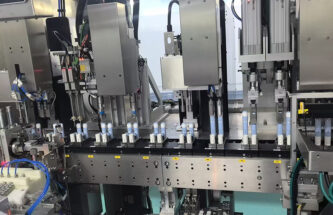
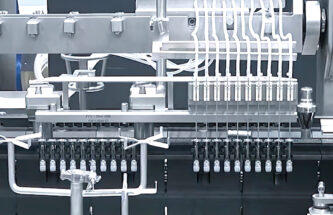
Jordan Xu examines the shift from fragmented procurement to integrated, turnkey assembly solutions, exploring the deep technical and regulatory drivers behind this evolution as the industry increasingly recognises that the real differentiator is not the speed of individual machines but the seamless integration of the entire assembly process.
EXPERT VIEW
Dr Wenzel Novak
CANNULA SELECTION FOR PREFILLED SYRINGE APPLICATIONS
Dr Wenzel Novak and Stephan Schatz discuss the considerations that go into optimising cannula selection for an injection device, including patient comfort, drug requirements, manufacturability and intended use case, arguing that the best selection will be one that successfully balances these factors rather than maximising a single parameter.
PREFILLED SYRINGES
Pauline Genovese
Unither Pharmaceuticals
The Effect of Freeze-Thaw Cycles on the Euroject
®
System
Pauline Genovese, Laury Livemont and Dr Alexandre Fontayne, present the findings of nine studies that investigated the impact of freezing and thawing on the company’s Euroject
®
injection system and its ability to deliver the appropriate dose.
SHOWCASE
Chelsea Keeton
Grand River Aseptic Manufacturing
Company Showcase: Grand River Aseptic Manufacturing
Grand River Aseptic Manufacturing discusses its sterile filling capabilities and how its expanding facilities support growing demand for vial, syringe and cartridge filling.
PREFILLED SYRINGES
Chiara Carraro
Stevanato Group
Building Confidence in Combination Product Development Through Pre-Verified Syringe-Device Configurations
Chiara Carraro and Enrico Barichello explain how pre-verified autoinjector and prefilled syringe configurations can help pharmaceutical companies make faster, evidence-based decisions when developing combination products for complex injectable therapies.
INTERVIEW
Patrick Jeukenne
BD (Becton Dickinson & Company)
Interview: Contamination Control in Practice: BD’s Global, Risk-Based Approach to Supporting Sterile Drug Manufacturing
BD's Patrick Jeukenne and Frédérique Pedretti-Abel explain how the company is putting contamination control into practice through global strategy, concrete investments and measurable actions. This approach is designed to support pharmaceutical manufacturers’ compliance and operational performance, while ultimately contributing to the quality and safety of medicines delivered to patients.
EXPERT VIEW
Dr Alex Vasiev
GETTING OUT OF A JAM: SUSPENSION DELIVERY, OCCLUSION AND DEVICE DESIGN
Dr Alex Vasiev discusses suspension-based parenteral systems, including micro- and nanoparticle suspensions and colloidal dispersions, where sedimentation, mechanical bridging and interfacial forces can strongly influence delivery performance.
PREFILLED SYRINGES
Pavan Hemmege Venkatappa
Aptar Pharma
USP <382> SYSTEM-LEVEL INSIGHTS TO SUPPORT EARLIER PACKAGING DECISIONS
Drawing on Aptar Pharma’s system-level collaboration framework, Pavan Hemmege Venkatappa, Technical Product Manager, explains how testing aligned with USP <382> can generate insights that support earlier decisions in packaging and delivery system development and can help development teams better understand system behaviour, identify potential risk areas and guide packaging system decisions before formal validation begins.
INJECTION
Tom Oakley
Sanner Group
Drug Delivery Devices Past and Future: A Retrospective on Innovation, Achievement and Hard Lessons
Tom Oakley and Ulrich Bruggemann discuss the innovations that featured novel forms of drug delivery for patients, but either failed to succeed commercially or even reach the market.
SHOWCASE
Lifecore Injectables
MASTERING PRODUCT TRANSFER FOR A RANGE OF INJECTABLES
Lifecore Injectables explores product transfer, the often overlooked step between formulation and filling, and looks at how transfer technologies, mixing and recirculation strategies can be matched to the demands of water-like solutions, highly viscous products and fast-settling suspensions to maintain product quality throughout manufacturing.
INTERVIEW
Michael Earl
Eco-inject
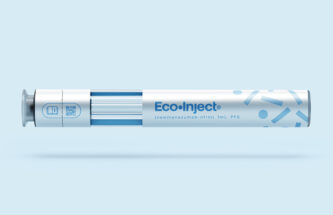
Interview: Eco-Inject: Bringing Affordable Sustainability to Single-Use Disposable Autoinjectors
In this exclusive interview, Michael Earl and Steven Kaufman speak about the significant progress Eco-Inject has made throughout 2026 since its highly successful funding round earlier in the year, discussing what’s new in the world of Eco-Inject, what sets the device platform apart from other approaches to sustainability in the autoinjector space, and how the industry is reacting to Eco-Inject as it moves towards the market.
1
2
3
…
46
Next
Top