INJECTION
DUAL CHAMBER
FORMULATION
PFS
WEARABLES
ALL INJECTION
OCULAR
ORAL
RESPIRATORY
PULMONARY
NASAL
ALL RESPIRATORY
SKIN
SUSTAINABILITY
MORE
INTERVIEWS
EXPERT VIEWS
EARLY INSIGHTS
COMPANY LISTINGS
OUR AUTHORS
THE MAGAZINE
EVENTS
ED CALENDAR
CONTRIBUTE
MEDIA PACK 2027
Subscribe
INJECTION
DUAL CHAMBER
FORMULATION
PFS
WEARABLES
ALL INJECTION
OCULAR
ORAL
RESPIRATORY
PULMONARY
NASAL
ALL RESPIRATORY
SKIN
SUSTAINABILITY
MORE
INTERVIEWS
EXPERT VIEWS
EARLY INSIGHTS
COMPANY LISTINGS
OUR AUTHORS
THE MAGAZINE
EVENTS
ED CALENDAR
CONTRIBUTE
MEDIA PACK 2027
SEARCH
SEARCH
advanced search
PULMONARY
PULMONARY
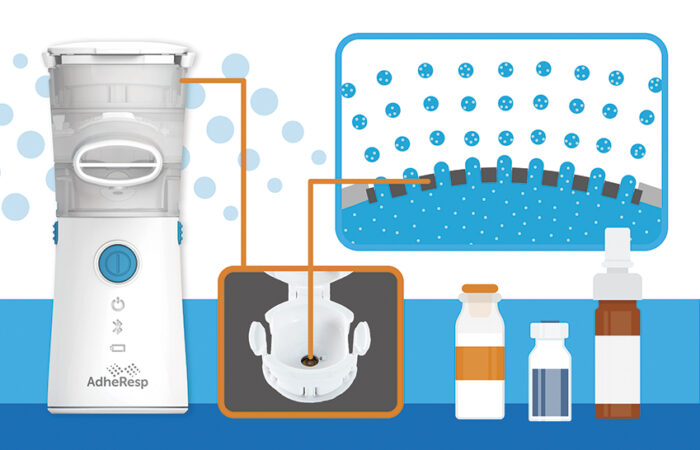
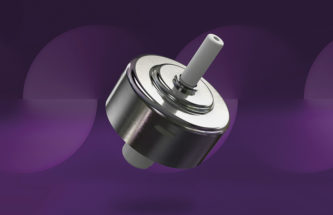
TUNING THE ADHERESP BREATH-ACTUATED MESH NEBULISER FOR CHALLENGING DELIVERY TO THE LUNGS
Chris Vernall presents an overview of the AdheResp
®
breath-actuated mesh nebuliser platform, alongside several studies conducted to optimise mesh nebuliser features to achieve ideal aerosol generation, particle size and delivery time.
PULMONARY
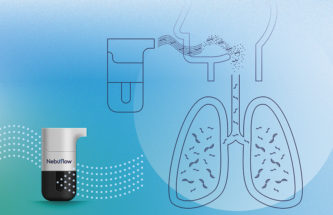
TUNING IN: A NEW ACOUSTIC PLATFORM FOR THE AGE OF INHALED BIOLOGICS
Dr Ethan Miller alongside Andrea Cusack and Dr David Cottenden highlight the mismatch between the delivery requirements of emerging drugs and the design of existing inhalation devices, making the case for the Nebu~Flow platform, which can be combined with a wide range of therapies and is capable of tuning droplet formulation.
INDUSTRIALISATION
Itay Speicher
Catalent Pharma Solutions
THE COMMERCIAL CASE FOR SPRAY-DRYING FOR MODERN DRUG PIPELINES
Itay Speicher highlights how current conditions in the pharmaceutical pipeline, especially the high proportion of poorly soluble drugs in early-stage development and rise in amorphous solid dispersions, along with the cost-efficiency and flexibility of spray-drying, are providing the optimal conditions to maximise the value of spray-drying in drug development and commercial scale-up.
PULMONARY
Jonathan Mulpas
Aptar Pharma
ACHIEVING CLINICAL READINESS FOR INHALED DRUG PRODUCTS
Jonathan Mulpas and Dr William Ganley present an integrated framework for preparing inhaled drug products for clinical evaluation. They focus on the decisions that should be addressed prior to clinical studies, the avoidable detours that can delay development and the role of formulation science, device optimisation and predictive testing in building confidence in inhaled products before they enter the clinic.
EXPERT VIEW
Tom Oakley
ELECTRONICS IN INHALATION DEVICES ARE TRANSFORMING DRUG DELIVERY, DOSE ACCURACY & PATIENT ADVOCACY
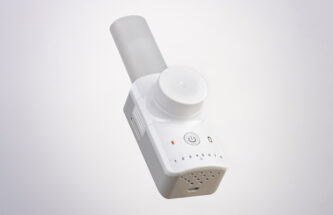
Tom Oakley provides an overview of how electronics can be successfully incorporated into inhalation devices, contributing to improved dosing accuracy, more consistent aerosolisation and, ultimately, better outcomes for patients, while also highlighting how these technologies can achieve smoother commercialisation when distinct development teams collaborate closely.
EXPERT VIEW
Paul Martin
CONNECTED INHALER TESTING: STRENGTHENING CONTROL, CONSISTENCY AND TRACEABILITY
Paul Martin and James Taylor explore how fragmented inhaler testing workflows can compromise consistency, data integrity and traceability, and how greater connectivity between equipment, software and data can strengthen control, scalability and productivity.
RESPIRATORY
Mireia Puig-Sellart
Phillips Medisize
HOW EARLY FORMULATION-DEVICE INTEGRATION CAN REDUCE RISK IN PRODUCT DEVELOPMENT FOR RESPIRATORY BIOLOGICS
Dr Mireia Puig-Sellart explains how integrating patient needs, formulation and device development from the outset of a development programme can reduce risk and improve development decisions for respiratory biologics.
EXPERT VIEW
Jabbar Gardy
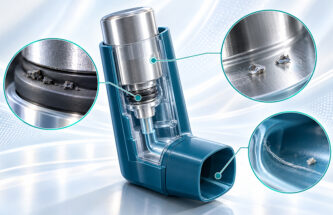
BEYOND PARTICLE COUNTS: CHARACTERISING FOREIGN PARTICULATES IN INHALED AND NASAL PRODUCTS
Dr Jabbar Gardy discusses how to go beyond simple counting when investigating foreign particles in orally inhaled and nasal drug products using different analytical techniques and describes the advantages that performing a deeper characterisation of such particulates can confer.
EXPERT VIEW
Darren Bromley-Davenport
CHOOSING THE RIGHT PROPELLANT IS ONLY THE FIRST STEP TOWARDS LOW-GWP pMDI SUCCESS
Darren Bromley-Davenport considers the pressures being placed on pressurised metered dose inhaler developers and manufacturers by tightening regulations regarding fluorinated gases and the transition to lower global warming potential propellants, and lays out how those that invest in partnerships with industry experts are set to de-risk their development programmes and decrease their time to market.
CONFERENCE SHOWCASE
Drug Delivery to the Lungs (DDL)
INVESTING IN INHALATION INNOVATION: A FUNDING GUIDE FOR RESPIRATORY START-UPS
Here, the DDL Incubator Committee reviews the challenges, considerations and opportunities associated with the funding routes available to early-stage and start-up respiratory companies, ahead of the conference’s novel DDL Incubator Hub titled “Investing in Inhalation Innovation”.
SUSTAINABILITY
Darren Bromley-Davenport
Orbia Fluor & Energy Materials
MANUFACTURERS’ ROLE IN DELIVERING ESSENTIAL RESPIRATORY HEALTHCARE DURING THE TRANSITION TO LOW-GWP pMDIs
Darren Bromley-Davenport of Orbia Fluor & Energy Materials discusses the transition from current hydrofluoroalkane propellants to lower global warming potential alternatives for use in metered dose inhalers, highlighting the services that the company can offer the industry via its GMP facilities and wealth of experience to ensure that the transition is as smooth as possible.
SUSTAINABILITY
Tony Mallett
Bespak
DESIGNING WITH SUSTAINABILITY IN MIND: ENGINEERING LOW CARBON pMDIs FROM THE COMPONENT UP
Tony Mallett and Richard Turner explain the environmental strategies that shape inhalation device development and commercial manufacture when designing for propellants with low global warming potential, allowing patients to receive safe and effective treatment with lower environmental impact.
INJECTION
Tom Oakley
Sanner Group
Drug Delivery Devices Past and Future: A Retrospective on Innovation, Achievement and Hard Lessons
Tom Oakley and Ulrich Bruggemann discuss the innovations that featured novel forms of drug delivery for patients, but either failed to succeed commercially or even reach the market.
INDUSTRIALISATION
Itay Speicher
Catalent Pharma Solutions
THE COMMERCIAL CASE FOR SPRAY-DRYING FOR MODERN DRUG PIPELINES
Catalent's Itay Speicher highlights how current conditions in the pharmaceutical pipeline, especially the high proportion of poorly soluble drugs in early-stage development and rise in amorphous solid dispersions, along with the cost-efficiency and flexibility of spray-drying, are providing the optimal conditions to maximise the value of spray-drying in drug development and commercial scale-up.
SUSTAINABILITY
Chris Baron
Aptar Pharma
REINVENTING THE pMDI: EVOLVING A PROVEN PLATFORM FOR A LOW-GWP FUTURE
Chris Baron discusses how lower-global warming potential pressurised metered dose inhalers are moving from development to commercialisation and explains why manufacturing readiness and supply resilience are critical, going on to introduce Aptar Pharma’s ZEN30 Futurity
®
, designed to anticipate current and emerging regulatory expectations.
EXPERT VIEW
Markus Laubscher
ENABLING A SUSTAINABLE FUTURE FOR pMDIs WITH LOW-GWP MEDICAL PROPELLANTS
Markus Laubscher discusses the role of pressurised metered dose inhalers in the context of healthcare’s drive towards sustainability, considering the need for lower-global-warming-potential propellants and why it is important to preserve these inhalers as a key aspect of respiratory care.
SUSTAINABILITY
Thomas Daly
Bespak
THE PHYSICS OF THE SWITCH: OPTIMISING pMDI DESIGN FOR LOW-CARBON LUNG DELIVERY
Thomas Daly and Tony Mallett discuss the transition to low-global warming potential propellants, examining the vital adjustments to the whole inhalation system necessary to support effective and safe dosing without hydrofluorocarbons.
INDUSTRIALISATION
Stephen Gilmore
Crux Product Design
Interview: Inside The Crux Technology Centre
Stephen Gilmore discusses the opportunities and capabilities unlocked by Crux’s new Technology Centre located in Bristol, UK. Mr Gilmore provides an overview of the new capabilities provided by the facility and the potential it represents to the future of the company.
PULMONARY
Simon Buchner
PARI
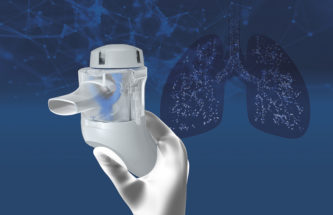
A NOVEL HUMAN FACTORS APPROACH FOR A NEW PLATFORM-BASED, BREATH-TRIGGERED NEBULISER
Simon Bucher, Dr Amy MacDonald and Dr John DeFoggi explain how human factors engineering is at the centre of the development of PARI’s breath-triggered eFlow
®
Integrated nebuliser, and consider how this approach preserves scientific rigour while avoiding redundant testing and ensuring efficient resource allocation.
PULMONARY
Kasim Yilginc
GAPLAST
HOW SOFT MIST INHALERS WILL BREATHE NEW LIFE INTO DRUG DEVELOPMENT
Kasim Yilginc discusses the expanding importance and influence of the respiratory sector within pharmaceutical pipelines, including the role that soft mist inhalers are poised to play in improving patient outcomes and how GAPLAST’s AirlessMotion
®
bag-in-bottle technology can support the development of these inhalation devices.
PULMONARY
Dr Elijah Nazarzadeh
Nebu~Flow
ACOUSTIC WAVE PLATFORM NEBULISER FOR INHALED DELIVERY OF BIOLOGIC THERAPIES
Dr Elijah Nazarzadeh reports on the applications of Nebu~Flow, an acoustic wave-based nebuliser platform, addressing the challenges associated with drug delivery to the lungs via more efficient aerosolisation, enabling precise inhaled delivery of life-changing treatments.
PULMONARY
Paul Martin
Copley Scientific
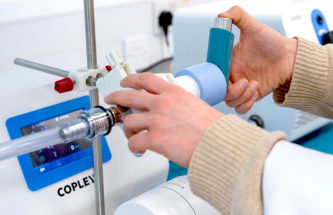
AUTOMATING MDI ACTUATION: PRECISION DATA WITH LESS EFFORT
Paul Martin considers how automation can enhance testing for metered dose inhalers by removing the variability in actuation technique introduced by manual operation, presenting two case studies that demonstrate this potential improvement in data quality.
EXPERT VIEW
Dr Matthew Owen
INTRANASAL DRUG DELIVERY: FORMULATION, DEVICE DESIGN & CHARACTERISATION STRATEGIES
Dr Matthew Owen reviews the formulation and device challenges, designs and considerations that are shaping the nasal delivery market.
CGT
Hanna Beike
PARI
THE IMPORTANCE OF MESH NEBULISER CONFIGURATION IN mRNA-LNP DELIVERY PERFORMANCE
Hanna Beike and Dr Benjamin Heine highlight the superior performance of customisable drug-specific nebuliser platforms, such as eFlowM
®
Open System and eFlow
®
Integrated, for the delivery of messenger RNA-based inhalation therapies.
PULMONARY
Carolyn Berg
Catalent Pharma Solutions
CHARTING THE COURSE FOR PULMONARY DRUG DEVELOPMENT
Carolyn Berg and Dr Alan Watts examine strategy considerations that can help emerging biotech companies navigate early-stage pulmonary drug development, providing practical guidance for addressing challenges of respiratory delivery and avoiding common pitfalls that can derail development programmes.
INTERVIEW
Christophe Pierre
Aptar Pharma
Interview: Aptar Pharma Expansion With New R&D Center
In this interview, Christophe Pierre introduces Aptar Pharma’s new R&D Center in France, and outlines how the new facility will assist the development of smarter, more integrated drug delivery solutions, facilitating progression from concept to full-scale industrialisation across multiple therapeutic fields.
1
2
3
…
15
Next
Top