

To Issue 182
Citation: “Interview with Dr Aurélie Rebuffet and Virginie Jeymond: New But Not News – A Smooth Transition to USP <382> with Established Expertise”. ONdrugDelivery, Issue 182 (Jan 2026), pp 58–61.
Visit BD at Pharmapack Paris! – Stand 4G28
Dr Aurélie Rebuffet and Virginie Jeymond, discuss the new requirements set out in the US Pharmacopeia (USP) Chapter <382>, including the shift towards assessing the drug-device combination product as a holistic whole and how ZebraSci and BD can support pharma companies in complying with USP <382>.
“USP <382> TAKES A MORE HOLISTIC APPROACH, ASSESSING THE ELASTOMERIC COMPONENTS AS PART OF THE FULL DRUG DELIVERY COMBINATION PRODUCT.”
Q To begin, can you give us an overview of USP <382>, why it is being implemented and how it differs from the current regulations in USP <381>?
AR USP <382> is a new chapter of the USP covering elastomeric components for injectables, including vials, cartridges and prefilled syringes (PFSs). Previously, USP regulations assessed the elastomeric components of a combination product individually, with USP <381> setting out the necessary tests and requirements and focusing primarily on the chemical characterisation of the elastomers. USP <382> takes a more holistic approach, assessing the elastomeric components as part of the full drug delivery combination product.
This change in focus is representative of a change in approach that is taking hold across the drug delivery industry. Over the past several years, an increasing emphasis has been placed on user centricity, considering patients, healthcare practitioners and caretakers. This has led developers and regulators to view the entire drug-device combination product as a single entity, rather than a collection of individual components. This change of focus acknowledges the potential interactions between the drug and its primary container, bringing these considerations into the development process to deliver better products that are safer for patient sand users.
In practical terms, USP <382> requires more tests for injectable combination products, some of which were previously covered by ISO standards and are now being formally brought under the USP. These new tests cover aspects such as container closure integrity (CCI); needle and spike access functionality for vial stoppers; functional performance metrics for PFS plungers, including activation and extrusion forces; and tip cap and needle shield functionality. Critically, these tests must now be performed on assembled devices filled with the actual drug product or a fully validated proxy, thereby ensuring that the results reflect real-world performance.
As a PFS and component expert, BD has long been prepared for USP <382> and is fully ready to support pharma customers with the changes it requires. Our role in this transition is to accompany drug developers and pharma partners in navigating these regulatory changes to support them in successfully bringing new injectable therapies to market with a minimum of hassle, so that patients can receive treatments that are safer and more effective.
Q What does USP <382> mean for players in the PFS space?
AR The two headline changes that come with USP <382> are new tests required for injectable systems and the necessity for these tests to be performed with the final drug product, which entails that pharma partners can no longer fully rely on existing data available from components manufacturers.
A key consideration of USP <382> is that the combination product must be shown to be “fit for purpose”. Specifically, this means that the complete system must show that it can maintain sterility and prevent contamination throughout its shelf life, and facilitate safe and effective administration of the drug product by fulfilling mechanical and functional criteria under real-use conditions. The thinking behind this “fit for purpose” approach is once again to ensure that patient outcomes are kept at the centre of drug development.
Regarding CCI, the new requirements focus on a full-system evaluation. Importantly, the new regulations prescribe deterministic testing methods rather than the probabilistic approach previously required. Probabilistic tests, such as bubble tests or dye ingress, are heavily reliant on visual inspection, which leads to greater variability and inconsistency in the results. In contrast, deterministic tests, such as vacuum decay and helium leak testing, provide precise, reproducible results. The more rigorous, science-based approach offered by deterministic testing methods aligns with USP <382>’s emphasis on full-system testing and produces results that are true to real-world use.
Another key requirement for PFSs in USP <382> is that device characteristics such as activation and extrusion forces, as well as tip cap and rigid needle shield (RNS) removal forces, need to be appropriate for the device’s target demographic. For example, under USP <382>, if a PFS combination product is targeted towards self-administration by elderly patients, whose grip strength will likely be lower. The drug developer will need to show that the PFS enables those patients to remove the RNS and depress the plunger successfully and consistently.
“WHILE THESE TESTS ARE NEW TO THE USP, THEY AREN’T NEW TO US – WE’VE BEEN CONDUCTING CCI, ACTIVATION AND EXTRUSION FORCE, AND TIP CAP AND RNS REMOVAL FORCE TESTS ON FULLY ASSEMBLED SYSTEMS FOR YEARS AS PART OF OUR STANDARD DESIGN VERIFICATION PROCESS.”
While these tests are new to the USP, they aren’t new to us – we’ve been conducting CCI, activation and extrusion force, and tip cap and RNS removal force tests on fully assembled systems for years as part of our standard design verification process. A key emphasis of USP <382> is the holistic approach to testing, meaning that the entire combination product – drug and device – must be tested as a whole for results to account for the specific interaction of the drug and its delivery system while being representative of real-world use. And that means data cannot simply be provided by the device manufacturer.
Q Who is responsible for ensuring that the regulations in USP <382> are followed?
AR USP <382> is a critical change for the industry. Previously, under USP <381> the device manufacturer could conduct the necessary tests on their devices and pass that data on to pharma partners for the regulatory submission. With USP <382>, the pharma company must provide test results conducted with their final drug product and carries the responsibility for ensuring that these tests were performed as required.
The reason for this change is simple – only the pharma company has direct access to all elements of the complete combination product. USP <382> considers both the drug and device as a holistic whole, mandating that tests be carried out on a fully assembled and filled system. While this is step forward in ensuring that test results are truer to real-world performance, it does mean that we as device developers can’t perform the necessary tests on our own, as we’re missing a key part of the picture: the drug.
The fact that pharma partners cannot fully rely on readily available data generated by device manufacturers further emphasizes their responsibility to regulatory authorities, which may seem daunting. But it doesn’t have to be. Some companies may already have the capabilities and expertise required to handle these tests in-house, while smaller players in the sector, such as biotech startups, will likely need assistance in meeting the requirements set by USP <382>. Fortunately, we have been building up experience in full-system testing for a long time and, with ZebraSci (a BD company), are now able to make that expertise as a service to our pharma partners.
“IN PARTICULAR, AS A BD COMPANY, ZEBRASCI SPECIALISES IN DEVICES FOR PARENTERAL INJECTION AND IS A SPECIALIST IN PFSs, NEEDLE SAFETY SYSTEMS AND ON-BODY INJECTORS.”
Q Who is ZebraSci and how are they positioned to support pharma companies in implementing USP <382>?
VJ Where BD offers our pharma partners an extensive portfolio of full prefillable systems, including the glass barrel, rubber closure, plastic components and secondary devices for parenteral injection, ZebraSci’s focus is on combination product development consulting and validation testing, including developing methodologies, specifically tailored to support the pharmaceutical, biotech and medical device sectors. Our extensive experience, in-house expertise and tight focus make us a leading expert in drug-device combination product validation testing. In particular, as a BD company, ZebraSci specialises in devices for parenteral injection such as PFSs, autoinjectors, needle safety systems and on-body injectors.
ZebraSci is fully prepared to perform the full-system testing required by USP <382> within our GMP laboratories (Figure 1). We operate sites in France, New Jersey (US), California (US) and China, giving us a global presence that enables us to reach our partners locally, all around the world. Additionally, we have small-scale fill-finish and assembly capabilities in-house, so we can assemble prefillable syringes on site with drug product provided by our pharma partners, with a unique ability to customise silicone levels for testing purposes.
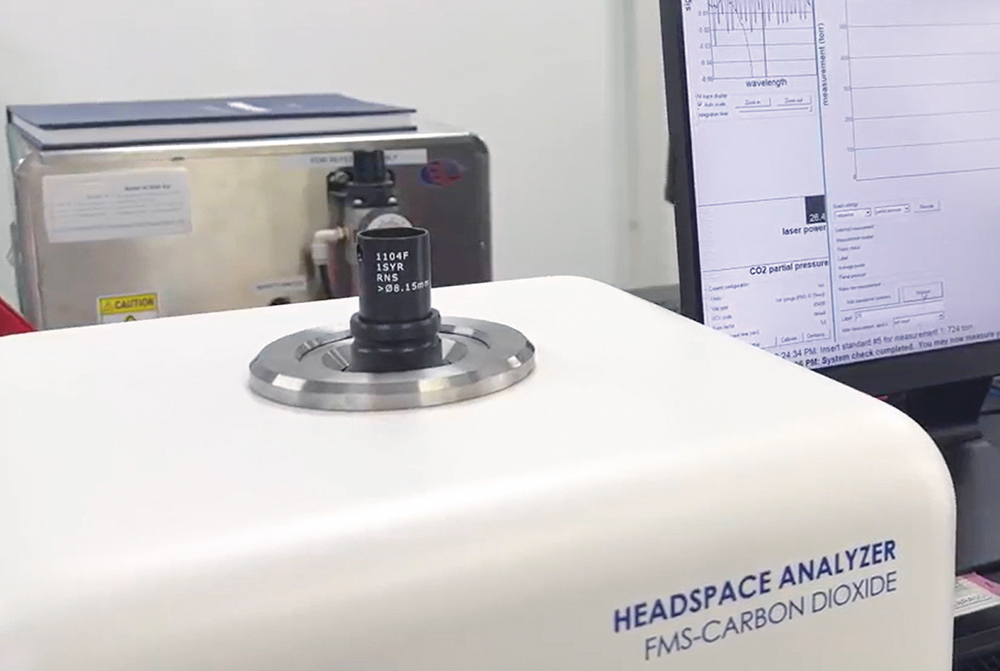
Figure 1: A laser headspace analyser at ZebraSci.
As a brief, non-exhaustive overview of our testing capabilities, we’re able to perform both probabilistic and deterministic CCI testing, extractables and leachables testing, toxicological risk assessments, siliconisation analysis, sub-visible particle analysis and a full range of performance testing – including break-loose and glide force testing. In summary, we’re well prepared to help pharma partners perform all the necessary testing for USP <382>.
However, it’s important to point out that our services aren’t limited to validation testing. ZebraSci is equipped to support customers throughout development, with expertise spanning from early-stage design through to regulatory submission. When it comes to USP <382>, on top of testing services, we’re able to support our partners with regulatory expertise, assisting them in putting together their submissions ,including custom protocol development for regulatory filings. Additionally, all our labs are GMP-compliant and have ISO 17025 and 13485 certifications.
We are fully capable of working with any drug delivery system in-house – we do not subcontract testing services to external partners. This means that we’ve built a depth of knowledge and expertise with combination products and have a thorough understanding of project timelines. As a BD company, we’re deeply integrated with BD and have a wealth of experience with BD’s product portfolio, which enables us to act as an integrated solution provider when advising on and working with BD products.
“ALL OF OUR PRODUCTS ARE VALIDATED USING A RIGOROUS DESIGN VERIFICATION PROCEDURE, INCLUDING CCI, LEAK TESTING AND GLIDE AND BREAKLOOSE FORCES.”
Q ZebraSci offers extensive support for combination product validation. What about early-stage selection of the primary packaging?
AR For years now – since before the announcement of USP <382> – BD has emphasised testing its products as complete systems, with a view to preparing datasets of system performance. All our products are developed using a rigorous design verification procedure, including CCI, leak testing and glide and break-loose forces. As you’ll note, these are the key aspects covered by USP <382>.
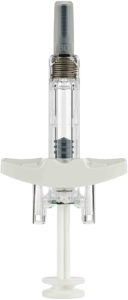
Figure 2: BD provides complete injection systems to its pharma partners.
This procedure was refined and reinforced during the development of the BD Neopak™ and BD Hypak™ Glass Prefillable syringe for biologics (Figure 2). We also put significant effort into generating a wealth of system data to demonstrate the performance capabilities of these products as complete systems, including in combination with BD SCF™ PremiumCoat® and BD SCF™ Flurotec® Plunger Stopper.
While this wealth of data may not be directly used for regulatory filings under USP <382> – as BD’s tests are conducted using model solvents – it provides a valuable benchmark that informs early-stage decision making and derisk combination product development. Additionally, this approach has helped BD develop robust, in-house experience that can be made available to pharma partners to help in their own combination product developments.
Along with ZebraSci, BD provides recommendations for primary packaging selection and regulatory support to our pharma partners, including personalised support to help them navigate the intricacies of combination product requirements and derisk their development process. When it comes to USP <382>, BD is well prepared and will continue to alleviate the responsibility associated with combination product testing for our partners and ensure that their development journeys are as smooth as possible, all to bring better, safer therapies to the most important stakeholder – the patient.
FluroTec® is a registered trademark of West Pharmaceutical Services, Inc, and PremiumCoat® is a registered trademark of Aptar Pharma.