INJECTION
DUAL CHAMBER
FORMULATION
PFS
WEARABLES
ALL INJECTION
OCULAR
ORAL
RESPIRATORY
PULMONARY
NASAL
ALL RESPIRATORY
SKIN
SUSTAINABILITY
MORE
INTERVIEWS
EXPERT VIEWS
EARLY INSIGHTS
COMPANY LISTINGS
OUR AUTHORS
THE MAGAZINE
EVENTS
ED CALENDAR
MEDIA PACK
CONTRIBUTE
Subscribe
INJECTION
DUAL CHAMBER
FORMULATION
PFS
WEARABLES
ALL INJECTION
OCULAR
ORAL
RESPIRATORY
PULMONARY
NASAL
ALL RESPIRATORY
SKIN
SUSTAINABILITY
MORE
INTERVIEWS
EXPERT VIEWS
EARLY INSIGHTS
COMPANY LISTINGS
OUR AUTHORS
THE MAGAZINE
EVENTS
ED CALENDAR
MEDIA PACK
CONTRIBUTE
SEARCH
SEARCH
advanced search
WEARABLES
WEARABLES
CONSISTENCY IN LARGE-VOLUME BIOLOGIC DRUG DELIVERY: WHY TISSUE BACKPRESSURE MATTERS
Andrew Moore discusses the importance of backpressure and its variance across the patient population when designing an infusion system for large-volume biologics, including how Gerresheimer’s Gx InPuls and Gx InPuls Flex infusors are able to adapt to this variance dynamically to ensure a consistent patient experience.
WEARABLES
THE PERCEPTION PROBLEM WITH SC VOLUME LIMITS AND ITS DRUG DEVELOPMENT COST
Dr Haydon DuMond, Dr Mehul Desai, along with Dr Shirish Ingawale, examine survey evidence and regulatory precedent showing that the widely cited 2–3 mL limit on subcutaneous delivery reflects device history and information habits rather than tissue biology, and consider the consequences for formulation strategy, device selection and the growing pipeline of large-volume subcutaneous therapies.
PREFILLED SYRINGES
Dr Jakob Lange
Ypsomed
FOR THE RECORD: HOW PAST EXPERIENCE ENABLES FUTURE SUCCESS
Dr Jakob Lange and Shawn James discuss the value of the experience hidden behind metrics such as completed projects and commercialised devices – the wealth of accumulated process knowledge that enables a company to bring hard-learned lessons forwards to benefit each new development programme and evolve its product portfolio to meet the needs of an evolving sector.
SHOWCASE
Chelsea Keeton
Grand River Aseptic Manufacturing
Company Showcase: Grand River Aseptic Manufacturing
Grand River Aseptic Manufacturing discusses its sterile filling capabilities and how its expanding facilities support growing demand for vial, syringe and cartridge filling.
INDUSTRIALISATION
Dr Carsten Köhler
BBS Automation
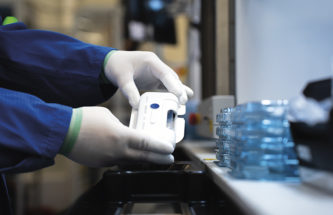
ASSEMBLY CONCEPTS FOR WEARABLE INJECTORS BASED ON ROI
Dr Carsten Köhler looks at how assembly concepts drive the return on investment in the wearable injectors market and the effect of automation on these metrics.
WEARABLES
Dr Greg Moakes
LTS
WHY SMARTER WEARABLES ARE THE SIMPLE ANSWER TO INTELLIGENT DRUG DELIVERY
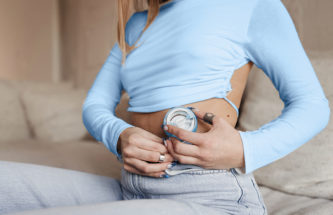
Dr Greg Moakes considers how complex devices, such as LTS’s Sorrel™ on-body delivery system can facilitate the self-administration of injectable therapies while continuously monitoring and verifying the device’s critical delivery functions.
WEARABLES
Dr Oliver Eden
TxSphere
SCALING ON-BODY DELIVERY FOR LARGE-VOLUME THERAPIES
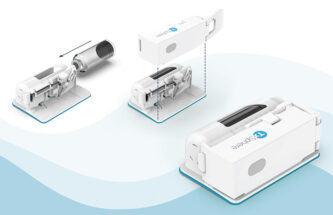
Mike Stout and Dr Oliver Eden examine the shift towards large-volume SC administration, what on-body delivery systems make possible and why bringing them to market at scale depends as much on manufacturing as on design.
WEARABLES
Dr Scott Russo
Synolus Medical
LIMITS SHATTERED: ENDING THE AUTOINJECTOR AND WEARABLE INJECTOR DIVIDE
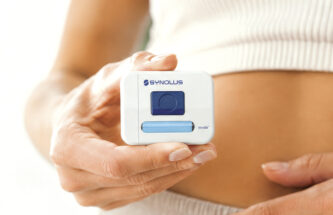
Dr Scott Russo questions the distinction between wearable injectors and autoinjectors, making the case that it is not fundamental to device design, rather it is an outdated segmentation that results in unnecessary design trade-offs. He introduces MiniGo, a next-generation platform device that aims to overcome this false dichotomy.
INTERVIEW
David Karvani
Ventura Solutions
Off The Critical Path: Bringing Device Strategy Forward In Combination Product Development
David Karvani and Greg Moakes discuss how early collaboration with device development partners can help pharma companies navigate the technical and regulatory complexities of combination product development.
EXPERT VIEW
Andy Wertheim
INDUSTRIAL ARCHITECTURE: THE NEXT COMPETITIVE ADVANTAGE IN WEARABLE INJECTORS
Andy Wertheim puts forward the case that wearable drug delivery devices comprise two separate architectures – therapeutic and industrial – that must be developed and implemented in tandem if a development programme is to achieve long-term commercial success.
WEARABLES
Reto Jost
Ypsomed
BEYOND DRUG DELIVERY: THREE LENSES FOR SELECTING AN ON-BODY PLATFORM
Reto Jost, Nadine Kaufmann and Shawn James discuss three complementary decision lenses and explain how they offer a practical framework for evaluating early platform decisions that can shape outcomes across the entire product lifecycle.
WEARABLES
Dan Yates
West Pharmaceutical Services
WEAR IT WELL: HOW ON-BODY DELIVERY SYSTEMS HAVE EVOLVED TO EMPOWER PATIENTS AND EMBOLDEN INNOVATORS
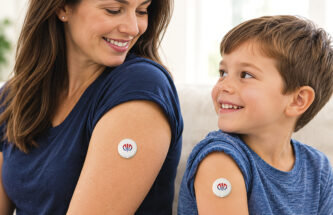
Dan Yates considers how wearables have increased their value for both patients and pharma partners through intentional design optimisation, highlighting how insights from real-world use have led to intentional design directions that satisfy the needs of these critical stakeholder groups, further building confidence in a configurable platform that maintains significant potential for future innovation.
EXPERT VIEW
Dr Matthew Roberts
DESIGN VERIFICATION FOR THE REAL WORLD: COMPLEX DRUG DELIVERY IN UNCONTROLLED ENVIRONMENTS
Dr Matthew Roberts and Andrew Fiorini explore the key steps involved in building a successful design verification programme for ambulatory electromechanical infusion systems and share the lessons they have learned along the way.
EARLY INSIGHT
David Johnston
Torramics
FROM SPACE PROPULSION TO DRUG DELIVERY: A NEW SUBCUTANEOUS PLATFORM FROM TORRAMICS
David Johnston introduces the NanoFlow platform, a wearable injector based on semiconductor architecture rather than a traditional mechanical pump, enabling enhanced dosing precision and further miniaturisation than is possible with legacy systems.
EXPERT VIEW
Dr Sammy Hassan
Designing a Wearable Drug Delivery Pump
Dr Sammy Hassan delves into the measures required to ensure safe and reliable use of wearable drug delivery pumps, explaining the difficulties and benefits of incorporating such standards into a device.
INDUSTRIALISATION
Fabio Weingärtner
Herrmann Ultraschall
Ultrasonic Joining Process Ensures Reliable Assembly of Sensitive CGM Components
Fabio Weingärtner discusses the value of ultrasonic welding for wearable diagnostic and drug delivery devices, using a continuous glucose monitor developed by GlucoModicum as a case study, describing the joining challenges for distinct, delicate components and the innovative solutions produced to overcome complex design requirements.
WEARABLES
Dr Ines Rüstenberg
Gerresheimer
FROM SMALL TO LARGE MOLECULES: ADVANCING PRECISION PUMP TECHNOLOGY FOR BIOLOGIC DRUG DELIVERY
Dr Ines Rüstenberg, Roger Müller and Dr Yannick Schmid, discuss solutions for large-molecule drug delivery, highlighting the applicability of two infusors, Gx InPuls and Gx InPuls Flex, which employ micropump technology to overcome challenges with large-molecule delivery.
WEARABLES
Tony Bedford
Phillips Medisize
LVSC DELIVERY: HOW VOLUME AND CONCENTRATION REQUIREMENTS ARE RESHAPING DEVICE SELECTION
Tony Bedford considers how the rise in biologic formulations together with a strong shift towards subcutaneous administration is shaping the drug delivery industry, particularly in relation to large-volume subcutaneous delivery.
EXPERT VIEW
Dr Mehul Desai
ANTIBODY-DRUG CONJUGATES: AN EMERGING FRONTIER IN IV TO SC CONVERSION
Dr Mehul Desai, Dr Michael Hageman and Dr Wei Chen examine the growing antibody-drug conjugate market, the unique formulation challenges these therapies present for subcutaneous delivery and how innovations in on-body injector technology may offer a practical path forwards.
INTERVIEW
Liat Shochat
EdgeOne Medical
Interview: Developing Wearable Injectors
Liat Shochat discusses her extensive experience in wearable drug delivery device development, covering the various challenges that arise from the inherent complexity of these devices, even with multiple successful wearable devices on the market, as well as the best way to engage with contract development organisations such as EdgeOne Medical.
EXPERT VIEW
Tim Quigg
THE PLATFORM PARADOX: DEVICE DEVELOPMENT CHALLENGES WITHIN FAST EVOLVING DRUG DISCOVERY PIPELINES
Tim Quigg, Mariam Al-Amari and Joel Gresham discuss how to enable high-dose delivery for novel biologics, using
ex vivo
and
in silico
approaches to accelerate drug-device development and improve device performance, thus de-risking projects and saving costs.
PHARMA VIEW
Conor O'Neill
GSK
ADOPTION OF SUSTAINABILITY PRACTICES WITHIN SUBCUTANEOUS DRUG DELIVERY: INDUSTRY INSIGHTS
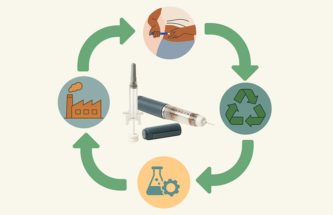
Conor O’Neill (GSK), Duncan Paterson (AstraZeneca) and Dr Monica Adams (GSK) come together to discuss a recent study conducted by the Subcutaneous Drug Development & Delivery Consortium among its member organisations, digging into the pharmaceutical industry’s progress and priorities when it comes to improving the environmental impact of subcutaneous medicines.
EXPERT VIEW
Dr Alex Vasiev
AUTOINJECTORS VERSUS ON-BODY SYSTEMS: THE FUTURE OF LARGE-VOLUME DELIVERY
Dr Alex Vasiev and Dr Ethan Miller weigh up the benefits and costs of using on-body injectors versus autoinjectors, discussing delivery, design and patient population variability alongside recent advances in on-body injector development.
EXPERT VIEW
Kristien De Clercq
POWDER TO THE PEOPLE: ACCELERATING ACCESS TO LYOPHILISED THERAPIES
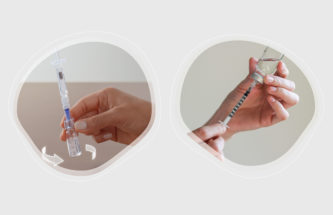
Kristien De Clercq and Dr Alex Vasiev discuss the challenges and recent advances in drying and reconstitution technologies, as well as how, while dual-chamber primary packaging offers a potential solution for simplifying reconstitution, it remains underused due to usability concerns and a prevailing industry preference for vial-based lyophilisation over alternative drying methods such as spray drying and powder filling.
WEARABLES
Reto Jost
Ypsomed
DIVERGENT DESIGN PHILOSOPHIES IN THE WEARABLE INJECTOR SEGMENT
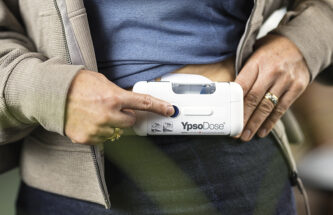
Reto Jost and Daniel Käser detail how Ypsomed is approaching wearable injector design with YpsoDose and achieving large-volume requirements, consistent dosing and low residual waste, going on to explain how the company’s design choices are integrated with patient-centric features to ensure adherence and comfort.
WEARABLES
Corinne Malica
Nemera
SYMBIOZE
®
– THE ELECTROMECHANICAL ON-BODY DRUG DELIVERY SYSTEM FOR LARGE-VOLUME IMMUNOTHERAPIES
Corinne Malica and Cécile Gross discuss the challenges involved in developing a wearable device for on-body drug delivery of advanced biologics, with a focus on the immunotherapy sector, and the technical solutions that can overcome them, using Nemera’s Symbioze
®
as an example.
1
2
3
…
12
Next
Top